Life After the Internet
Explore life after the internet revolution, where technology reshapes our daily habits, connections, and the way we see the world. Discover the balance between digital and real-world experiences in this engaging and thought-provoking exploration.
In the age before the internet became an omnipresent force in our lives, simplicity reigned. Children played in the streets, families gathered for meals without the distraction of screens, and knowledge was sought in books and conversations. The world felt expansive, full of mystery, and human connections were tangible, often marked by shared experiences and face-to-face interactions. But as we ventured into the digital age, the internet slowly wove itself into the fabric of our daily lives, changing the way we think, communicate, and even perceive the world around us.
इंटरनेट के युग से पहले, जीवन अधिक सरल और शांतिपूर्ण हुआ करता था। बच्चे गलियों में खेलते थे, परिवार बिना किसी स्क्रीन के ध्यान भटकाए साथ में भोजन करते थे, और ज्ञान की तलाश किताबों और बातचीत में होती थी। दुनिया बहुत बड़ी और रहस्यमय लगती थी, और मानव संपर्क वास्तविक और अनुभवों से भरे होते थे। लेकिन जैसे-जैसे हम डिजिटल युग में प्रवेश करते गए, इंटरनेट धीरे-धीरे हमारे जीवन का हिस्सा बनता गया, जिससे हमारे सोचने, संवाद करने और दुनिया को समझने के तरीके में बदलाव आया।
The Shift in Daily Life
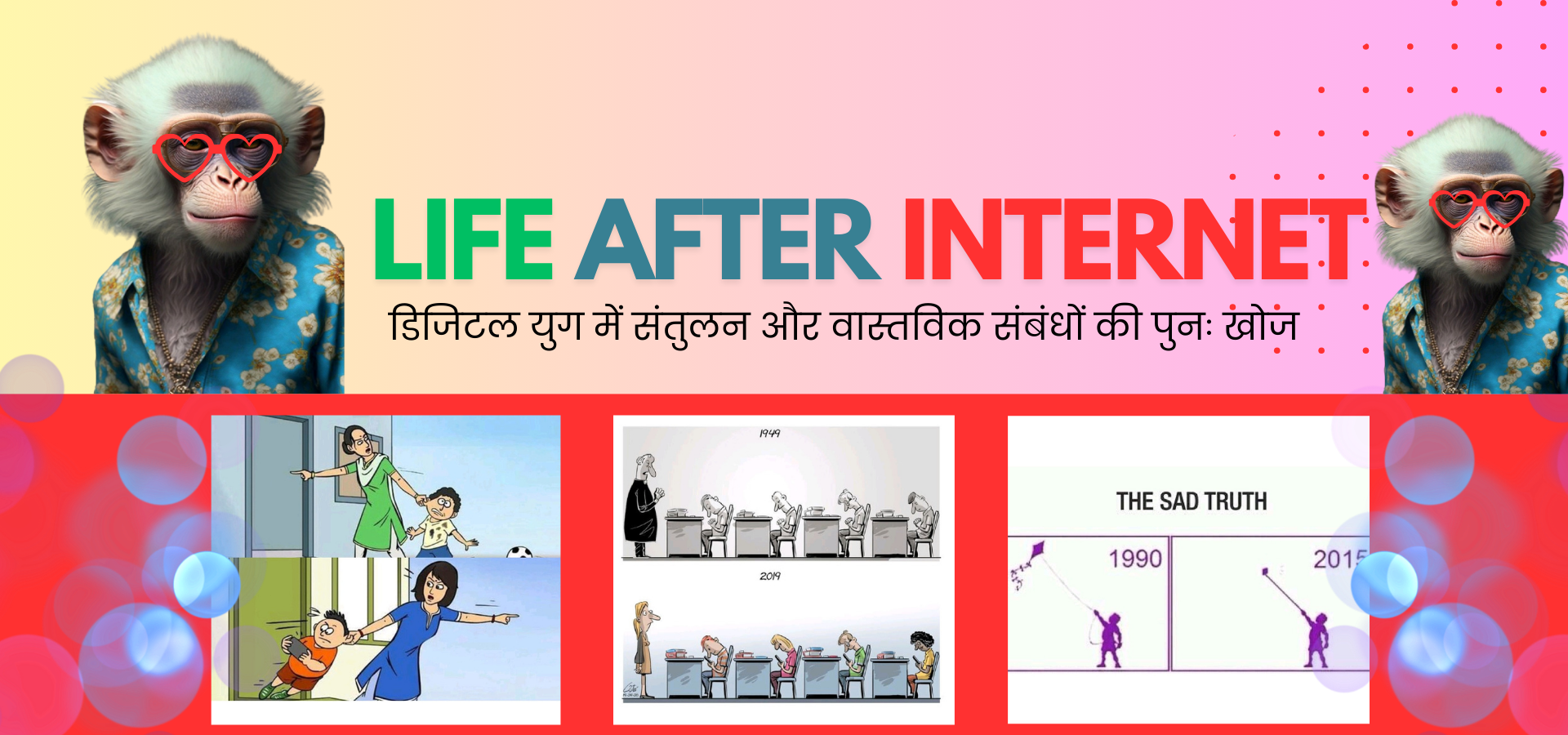
Before the internet, activities were rooted in the physical world. Children like us spent hours outdoors, flying kites or playing cricket. The excitement of chasing a kite through open fields or the thrill of scoring a run in a local game created bonds and memories that lasted a lifetime. Fast forward to today, and we see a stark contrast. The kite has been replaced by the selfie stick, the field by the smartphone screen, and the joy of real play by the instant gratification of digital likes. As you rightly observed, “Chijein wahi hain bas tarike aur nazariye badal gaye hain”—the essence of life remains the same, but the ways we experience it have shifted dramatically.
This transformation is vividly illustrated in the way parents interact with their children today. You mentioned how earlier, mothers would pull their children inside the house by the right ear when they spent too much time playing outside. Now, they often find themselves dragging their kids out by the left ear, trying to pry them away from mobile games and screens. The internet, while opening up a world of opportunities, has also enclosed us within the walls of our homes, making virtual interactions more common than real ones.
दैनिक जीवन में बदलाव
इंटरनेट से पहले, गतिविधियाँ अधिकतर भौतिक दुनिया में ही सीमित थीं। बच्चे घंटों बाहर खेलते, पतंग उड़ाते या क्रिकेट खेलते थे। खुली जगहों में पतंग का पीछा करने का उत्साह या स्थानीय खेल में रन बनाने का रोमांच, ऐसे संबंध और यादें बनाता था जो जीवन भर साथ रहते थे। आज के समय में, यह दृश्य पूरी तरह बदल गया है। पतंग की जगह सेल्फी स्टिक ने ले ली है, मैदान को मोबाइल स्क्रीन ने और असली खेल की खुशी को डिजिटल लाइक्स ने। जैसा कि आपने सही कहा, "चीज़ें वही हैं, बस तरीके और नज़रिए बदल गए हैं"—जीवन का सार तो वही है, लेकिन उसे जीने के तरीके और अनुभव करने के नज़रिए में भारी बदलाव आ गया है।

इस बदलाव का स्पष्ट उदाहरण माता-पिता और बच्चों के संबंध में देखा जा सकता है। पहले, माँ अपने बच्चों को ज्यादा देर खेलने पर कान पकड़कर घर लाती थीं। अब, वे अक्सर बच्चों को मोबाइल गेम्स और स्क्रीन से दूर करने की कोशिश करती हैं। इंटरनेट ने जहाँ एक ओर अवसरों की दुनिया खोली है, वहीं दूसरी ओर इसने हमें अपने घरों की दीवारों में कैद कर दिया है, जिससे वास्तविक के बजाय वर्चुअल संवाद अधिक हो गए हैं।
Social Interactions and Relationships
Social interactions have undergone a seismic shift in the internet age. Where once people gathered in parks, community centers, or over tea to discuss everything from daily life to global events, today, much of this interaction has moved online. Social media platforms have become the new town squares, where thoughts, ideas, and even identities are exchanged. However, this shift has come with its own set of challenges. While the internet has made it easier to stay connected with people across the globe, it has also, paradoxically, created a sense of isolation. We are more connected than ever, yet loneliness is on the rise. The depth of relationships is often compromised by the superficial nature of online interactions.
The impact on relationships is particularly profound. The internet has altered how we form, maintain, and even end relationships. Dating, for instance, has been revolutionized by online platforms. What was once a process of meeting, knowing, and understanding someone in person has often become a swipe-based decision-making process. This has led to a more disposable approach to relationships, where the next potential partner is just a click away. However, this convenience has a downside; the emotional investment in relationships often diminishes, leading to shallow connections.
सामाजिक संपर्क और रिश्ते
सामाजिक संपर्कों में भी इंटरनेट युग में भारी बदलाव आया है। जहाँ पहले लोग पार्कों, सामुदायिक केंद्रों या चाय के साथ बैठकर चर्चा करते थे, आज वही बातचीत ऑनलाइन प्लेटफार्मों पर शिफ्ट हो गई है। सोशल मीडिया नए "चौराहे" बन गए हैं, जहाँ विचार, पहचान और भावनाओं का आदान-प्रदान होता है। हालांकि, इस बदलाव के साथ कई चुनौतियाँ भी आई हैं। इंटरनेट ने जहाँ दुनिया भर के लोगों से जुड़े रहने को आसान बना दिया है, वहीं इसने अलगाव की भावना भी बढ़ाई है। हम पहले से ज्यादा जुड़े हुए हैं, लेकिन फिर भी अकेलापन बढ़ रहा है। रिश्तों की गहराई अक्सर ऑनलाइन बातचीत की सतही प्रकृति के कारण कम हो जाती है।
रिश्तों पर इसका प्रभाव विशेष रूप से गहरा है। इंटरनेट ने हमारे रिश्ते बनाने, बनाए रखने और समाप्त करने के तरीके को पूरी तरह बदल दिया है। डेटिंग, उदाहरण के लिए, ऑनलाइन प्लेटफार्मों द्वारा क्रांतिकारी बदलाव का शिकार हुई है। पहले, किसी से मिलने, जानने और समझने की प्रक्रिया आमने-सामने होती थी, जो अब एक स्वाइप आधारित निर्णय प्रक्रिया में बदल गई है। इसने रिश्तों के प्रति एक अधिक तात्कालिक दृष्टिकोण को जन्म दिया है, जहाँ अगला संभावित साथी बस एक क्लिक की दूरी पर होता है। लेकिन इस सुविधा के साथ एक कमी भी है; रिश्तों में भावनात्मक निवेश अक्सर घट जाता है, जिससे जुड़ाव सतही हो सकता है।
Information and Knowledge Acquisition
The internet is a double-edged sword when it comes to knowledge and information. On one hand, it has democratized access to information, making it possible for anyone with an internet connection to learn about virtually any topic. In the past, knowledge was confined to books, experts, and libraries. Now, with a few keystrokes, a world of information is available at our fingertips. This has undoubtedly empowered individuals and facilitated a global exchange of ideas.
But with this abundance of information comes the challenge of discerning truth from falsehood. The internet is rife with misinformation, and the sheer volume of content can be overwhelming. Additionally, the algorithms that govern what information we see are designed to reinforce our existing beliefs, creating echo chambers that limit our exposure to diverse perspectives. This has contributed to the polarization we see in society today, where people are more likely to encounter information that confirms their biases rather than challenges them.
ज्ञान और सूचना की प्राप्ति
ज्ञान और सूचना के संदर्भ में, इंटरनेट एक दोधारी तलवार है। एक ओर, इसने सूचना की पहुंच को लोकतांत्रिक बना दिया है, जिससे इंटरनेट कनेक्शन वाले किसी भी व्यक्ति को किसी भी विषय के बारे में सीखने का अवसर मिल सकता है। पहले, ज्ञान पुस्तकों, विशेषज्ञों और पुस्तकालयों तक सीमित था। अब, कुछ कीबोर्ड स्ट्रोक के साथ, जानकारी की एक दुनिया हमारे सामने खुल जाती है। इसने निःसंदेह व्यक्तियों को सशक्त बनाया है और वैश्विक विचारों के आदान-प्रदान को संभव बनाया है।
लेकिन इस जानकारी की प्रचुरता के साथ सत्य और असत्य के बीच भेद करना भी चुनौतीपूर्ण हो गया है। इंटरनेट पर गलत सूचना बहुत अधिक है, और सामग्री की विशाल मात्रा कई बार भ्रमित कर देती है। इसके अलावा, जो जानकारी हमें दिखाई जाती है, उसे नियंत्रित करने वाले एल्गोरिदम हमारे मौजूदा विश्वासों को ही मजबूत करने के लिए डिज़ाइन किए गए हैं, जिससे हमें विविध दृष्टिकोणों का सामना करने के बजाय एक ही तरह की जानकारी मिलती रहती है। इसने समाज में ध्रुवीकरण को बढ़ावा दिया है, जहाँ लोग अक्सर ऐसी जानकारी का सामना करते हैं जो उनके पूर्वाग्रहों की पुष्टि करती है, बजाय कि उन्हें चुनौती देती है।
The New Economy
The internet has also revolutionized the economy, creating new industries and transforming existing ones. E-commerce, for example, has reshaped the retail landscape, allowing consumers to shop from the comfort of their homes and have products delivered to their doorsteps. This convenience, however, has come at the cost of traditional brick-and-mortar stores, many of which have struggled to compete with online giants.
Moreover, the gig economy, enabled by the internet, has changed the nature of work itself. Platforms like Uber, Airbnb, and Fiverr have created new opportunities for earning a living, but they have also led to a precarious labor market where job security is increasingly rare. Workers in the gig economy often lack benefits like health insurance and retirement plans, making them vulnerable to economic fluctuations.
नई अर्थव्यवस्था
इंटरनेट ने अर्थव्यवस्था को भी पूरी तरह से बदल दिया है, नई उद्योगों को जन्म दिया और मौजूदा उद्योगों को परिवर्तित कर दिया। ई-कॉमर्स, उदाहरण के लिए, खुदरा परिदृश्य को बदलकर रख दिया है, जिससे उपभोक्ताओं को अपने घरों से ही खरीदारी करने और उत्पादों की डिलीवरी का आनंद लेने का अवसर मिला है। लेकिन इस सुविधा की कीमत चुकानी पड़ी है, और कई पारंपरिक खुदरा स्टोर ऑनलाइन दिग्गजों के साथ प्रतिस्पर्धा करने में असमर्थ रहे हैं।
इसके अलावा, गिग अर्थव्यवस्था, जिसे इंटरनेट ने सक्षम किया है, ने कार्य की प्रकृति को भी बदल दिया है। Uber, Airbnb और Fiverr जैसे प्लेटफार्मों ने आजीविका कमाने के नए अवसर पैदा किए हैं, लेकिन उन्होंने एक अस्थिर श्रम बाजार भी बनाया है, जहाँ नौकरी की सुरक्षा कम होती जा रही है। गिग अर्थव्यवस्था में काम करने वाले अक्सर स्वास्थ्य बीमा और पेंशन योजनाओं जैसे लाभों से वंचित होते हैं, जिससे वे आर्थिक उतार-चढ़ाव के प्रति संवेदनशील हो जाते हैं।
Entertainment and Leisure
Entertainment, too, has been transformed by the internet. Gone are the days when families would gather around the television to watch a favorite show together. Now, entertainment is highly personalized, with streaming services offering content on demand. This has led to the phenomenon of binge-watching, where viewers consume entire seasons of shows in one sitting. While this level of convenience is appealing, it has also changed the way we engage with content, often leading to a more passive consumption of entertainment.
Video games have also seen a dramatic shift. What was once a social activity, with friends gathering to play together, has become an online experience. Multiplayer games now connect players from around the world, but this has also led to the decline of in-person interactions. The sense of camaraderie that came from playing together in the same room has been replaced by virtual teamwork, which, while still enjoyable, lacks the same level of personal connection.
मनोरंजन और अवकाश
मनोरंजन भी इंटरनेट के कारण पूरी तरह बदल गया है। वह समय गया जब परिवार एक साथ टीवी के सामने बैठकर पसंदीदा शो देखते थे। अब, मनोरंजन अत्यधिक वैयक्तिकृत हो गया है, जहाँ स्ट्रीमिंग सेवाएं मांग पर सामग्री प्रदान करती हैं। इसने बिंज-वॉचिंग जैसी प्रवृत्ति को जन्म दिया है, जहाँ दर्शक एक ही बैठक में शो के पूरे सीजन को देख लेते हैं। हालांकि यह सुविधा आकर्षक है, इसने सामग्री के साथ हमारे जुड़ाव के तरीके को भी बदल दिया है, जिससे अक्सर मनोरंजन की निष्क्रिय खपत होती है।
वीडियो गेम्स में भी नाटकीय बदलाव आया है। जो कभी एक सामाजिक गतिविधि थी, जहाँ दोस्त मिलकर एक साथ खेलते थे, वह अब एक ऑनलाइन अनुभव बन गया है। मल्टीप्लेयर गेम्स अब दुनिया भर के खिलाड़ियों को जोड़ते हैं, लेकिन इसने व्यक्तिगत संपर्कों में कमी भी लाई है। एक साथ कमरे में खेलकर बनने वाली सहानुभूति की भावना अब वर्चुअल टीमवर्क में बदल गई है, जो कि अभी भी आनंददायक है, लेकिन उसमें व्यक्तिगत जुड़ाव की वही गहराई नहीं है।
Conclusion: The Way Forward
As we reflect on life after the internet, it is clear that while the internet has brought many benefits, it has also introduced challenges that we must address. The key lies in finding a balance between the digital and physical worlds. It’s not about rejecting the internet but about using it mindfully. Just as in the past, our parents balanced the freedom of outdoor play with the discipline of coming home on time, we must learn to balance our online lives with meaningful offline experiences.
The future of life after the internet is not predetermined. We have the power to shape it by choosing how we engage with the digital world. By prioritizing real connections, fostering critical thinking, and being mindful of our time online, we can ensure that the internet enhances our lives rather than detracts from it. In this way, we can navigate the challenges of the digital age while preserving the essence of what makes us human.
निष्कर्ष: आगे का रास्ता
इंटरनेट के बाद के जीवन पर विचार करते हुए, यह स्पष्ट है कि इंटरनेट ने जहाँ कई लाभ दिए हैं, वहीं उसने कई चुनौतियाँ भी पेश की हैं जिन्हें हमें संबोधित करने की आवश्यकता है। कुंजी डिजिटल और भौतिक दुनियाओं के बीच संतुलन खोजने में है। बात इंटरनेट को अस्वीकार करने की नहीं है, बल्कि इसे समझदारी से इस्तेमाल करने की है। जैसे पहले हमारे माता-पिता ने बाहर खेलने की आजादी और समय पर घर लौटने के अनुशासन को संतुलित किया था, हमें भी अपने ऑनलाइन जीवन और वास्तविक अनुभवों के बीच संतुलन साधना सीखना चाहिए।
इंटरनेट के बाद के जीवन का भविष्य निर्धारित नहीं है। हम इसे आकार देने की शक्ति रखते हैं, यह तय करके कि हम डिजिटल दुनिया से कैसे जुड़ते हैं। असली संपर्कों को प्राथमिकता देकर, आलोचनात्मक सोच को प्रोत्साहित करके, और अपने ऑनलाइन समय के प्रति सतर्क रहकर, हम सुनिश्चित कर सकते हैं कि इंटरनेट हमारे जीवन को संवारने के बजाय उसका ह्रास न करे। इस तरह, हम डिजिटल युग की चुनौतियों को नेविगेट कर सकते हैं और साथ ही यह भी सुनिश्चित कर सकते हैं कि जो हमें इंसान बनाता है, उसे संजोकर रखें।
You can read nour other blogpost by tapping the link showing, The Crucial Role of Responsive Web Design in Capturing Global AudiencesUnderstanding the Difference Between a Sales Funnel and a Website
if you like our blogpost can like us on socialmeadia